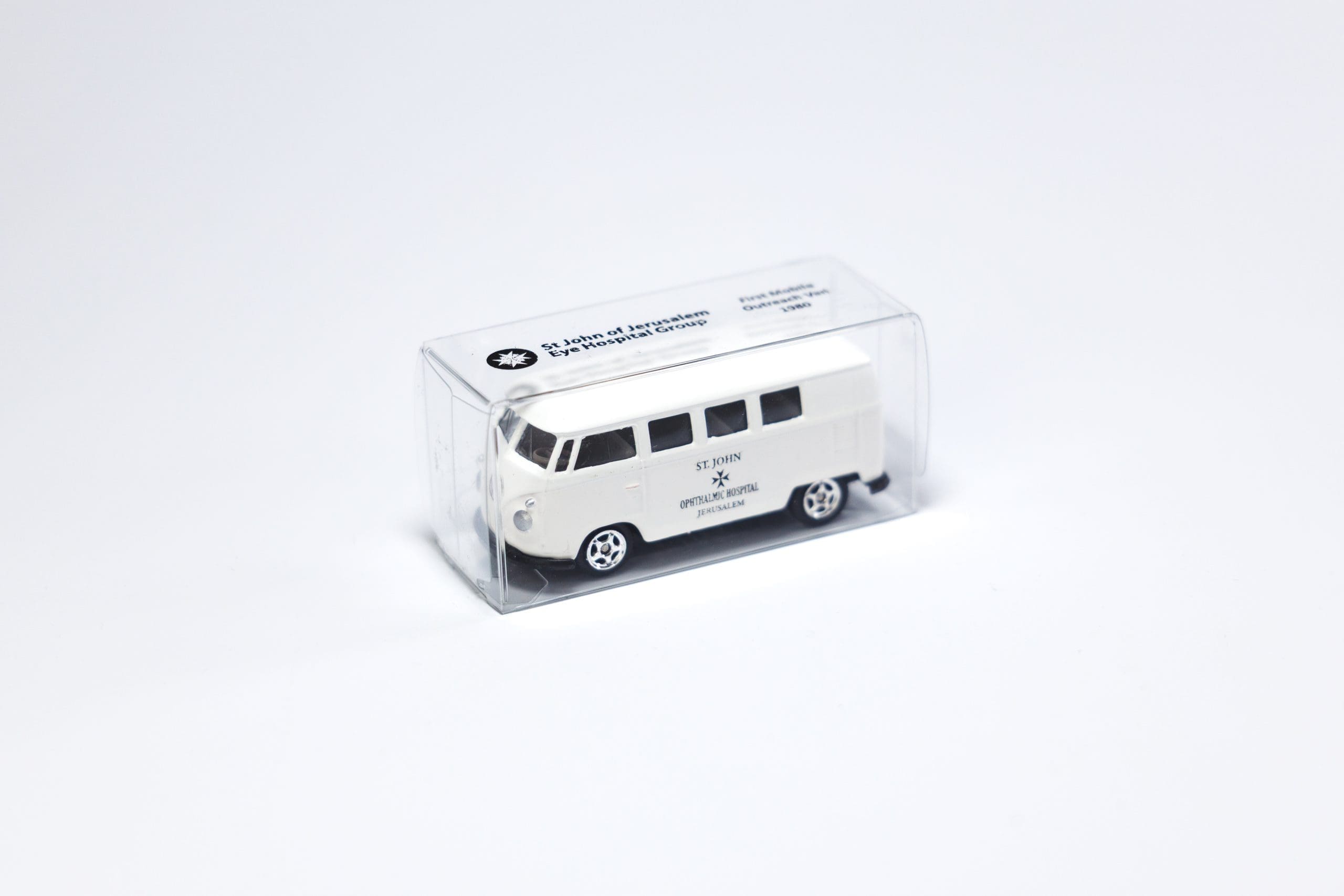



One of the defining features of the part of the world in which we work is its people’s inability to travel freely. This means that our Outreach project – begun in 1980 – is certainly one of the most regionally relevant of all of our services.
Outreach literally does “reach out” to people, taking vital screening and treatment to patients living in remote, rural and impoverished towns and communities in the West Bank; patients who might be prohibited from coming to the St John Eye Hospital in Jerusalem.
Our Outreach team starts out at 7.30am four mornings per week and often returns after dark. It too can be held up at military checkpoints or even turned back and not allowed to enter a particular village – where 50-60 patients can be waiting patiently for their arrival. But the team’s motto – ‘we will get through’ – usually means that they find a way around the many obstacles they face.
Over the 45 years of the military occupation of the West Bank, and 40 years of the Gaza Strip, many different types of movement restrictions have been imposed on the Palestinians. The form of these constraints change and increase, or decrease, over time. Collectively, they are known as the closure policy. They include closing down access to both vehicular and pedestrian roads and passages throughout the occupied Palestinian territory (OPT), and also restrict movement between the OPT and other countries. A complex system of identity cards and travel permits further govern and delimit passage.
In 2002, an additional obstacle was introduced as the Separation Wall was begun. This is a combination of an eight metre high concrete wall and/or ditches, trenches, fences, razor wire, electronic fences and military roads. The Wall almost completely immures the West Bank and sometimes runs through Palestinian towns and villages. It is not yet finished.
In 2012, our Mobile Outreach Team saw 10,511 patients – 3,667 under the age of 18.